
Organic Chemistry, 7e
Organic chemistry is a subdivision of chemistry which deals with the learning of the structure, properties and reactions of organic mixtures and materials.
Not in Stock. Ships in: 4-6 weeks
Details
Organic Chemistry, 7e
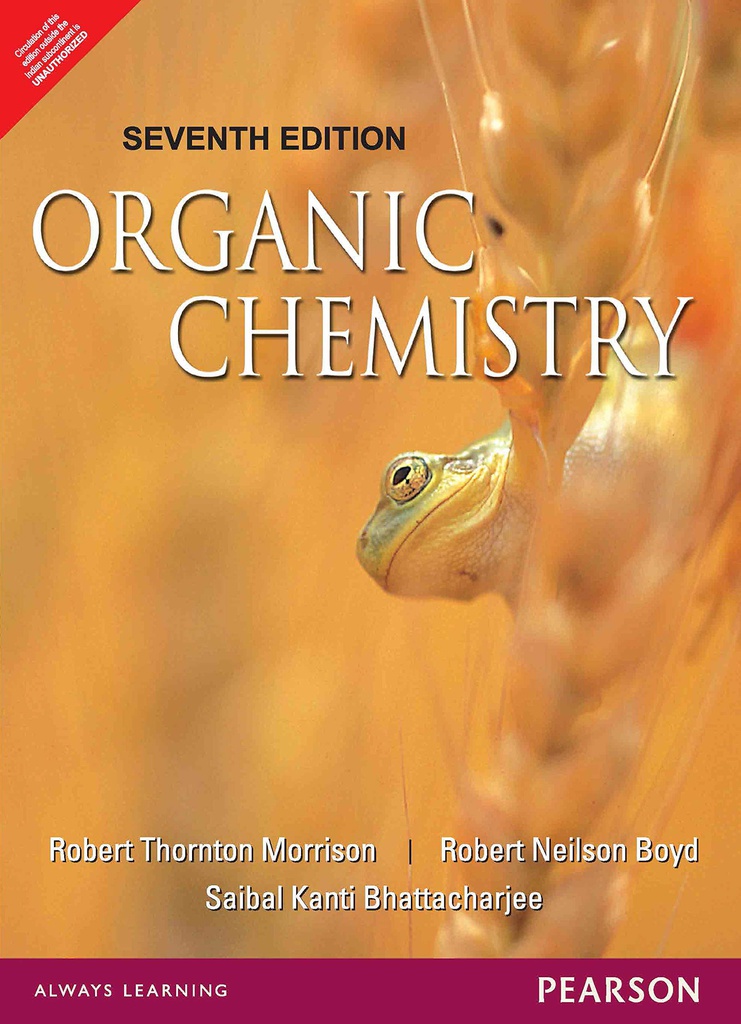
Organic chemistry is a subdivision of chemistry which deals with the learning of the structure, properties and reactions of organic mixtures and materials. Organic chemistry expresses the concepts and the basics of the topic in reader-friendly language. The book is divided into many sections that talk about the different features of this subdivision. The chapters comprise of fundamental of organic chemistry, specific topics, chemistry of functional groups, contemporary and future organic chemistry and biomolecules and bioorganic chemistry. The 7th edition organic chemistry is available in paperback on Amazon and was published by Pearson education in the year 2010. The book broadly covers topics related in the present and upcoming situation such as drugs and synthetic dyes, nanoparticles and future devices, such as molecular machines and green chemistry.
Table of Content:
Part 1: Fundamentals of Organic Chemistry
1. Structures of Organic Compounds
2. Structural Theory
3. Symmetry of Organic Molecules (Molecular Dissymmetry)
4. Types of Reactions of Organic Compounds
5. Alkanes, Cycloalkanes and Aromatic Hydrocarbons
Part 2: Chemistry of Functional Groups Alkenes
11. Alkynes
12. Alkyl Halides Nucleophilic Substitutions, SN Reactions
13. Aryl Halides Nucleophilic Aromatic Substitution (SNAr Reactions)
14. Alcohols and Ethers
15. Phenols
16. Aldehydes and Ketones Nucleophilic Addition
17. Carboxylic Acids
18. Functional Derivatives of Carboxylic Acids Nucleophilic Acyl Substitution
19. Amines
Part 3: Special Topics
20. Heterocyclic Compounds
21. Purifi cation and Identifi cation of Organic Compounds: Spectroscopic Analysis of Organic Compounds
22. Organic Synthesis
23. Oxidation and Reduction Electroorganic Synthesis
24. Molecular Orbitals; Orbital Symmetry (Pericyclic Reactions)
25. Organic Photochemistry
26. Synthetic Organic Compounds of Commercial Importance: Synthetic Dyes and Macromolecules
27. Symphoria (Anchimeric Assistance) Neighboring Group Eff ects Catalysis by Transition Metal Complexes
28. Introduction to Supramolecular Chemistry Host–Guest Chemistry
Part 4: (Biomolecules and Bioorganic Chemistry)
29. Lipids Fats, Steroids, Terpenes, and Prostaglandins
30. Carbohydrates I: Monosaccharides Carbohydrates II: Disaccharides and Polysaccharides
31. Alkaloids
32. Amino Acids and Proteins Molecular Biology
33. Enzymes, Co-Enzymes and Vitamins
34. Nucleic Acids Nucleotides, Polynucleotides and Nucleosides
35. Drugs Chemotherapeutic and Pharmacodynamic Agents
Part 5: Contemporary and Future Organic Chemistry
36. Nanoparticles (Size-Dependent Chemistry)
37. Future Devices and Challenges of Chemistry of this Century Molecular Machines or Nanomachines
About the Author
The book is written by Robert Neilson Boyd and Robert T. Morrison who were American chemists. Robert N. Boyd was professor of chemistry at New York Universityfrom 1947.They both are best known for their book Organic Chemistry, which first appeared in 1959 and in the United States and beyond a standard textbook was over 2 million copies sold. The best-seller book has gone through 7 editions and has also been translated in numerous languages.
| Book | |
|---|---|
| Author | Morrison |
| Pages | 1508 |
| Year | 2010 |
| ISBN | 9788131704813 |
| Publisher | Pearson |
| Language | English |
| Uncategorized | |
| Edition | 7/e |
| Weight | 1.57 kg |
| Dimensions | 20.3 x 25.4 x 4.7 cm |
| Binding | Paperback |